


In De la scène à l’alcôve, Benoît Dratwicki, a researcher and artistic director at the Centre de musique baroque de Versailles, examines the solo singers of the Paris Opera during the Ancien Régime. From their training to their retirement, the book places these performers at the heart of opera creation and theatrical performance, exploring their careers, their stage practices and their place in the society of the time.
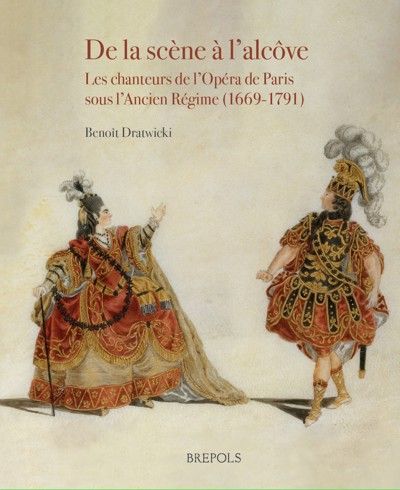
Publisher: Editions Brepols
De la scène à l'alcôve
Les Chanteurs de l'Opéra de Paris sous l'Ancien Régime (1669-1791)
Benoît Dratwicki (CMBV – CESR)
Founded in 1669 by Perrin and Cambert, and subsequently placed under Lully’s direction in 1672, the Académie royale de musique (the Paris Opera) was the most prestigious musical institution in the Kingdom until the Revolution. Whilst the works that make up its repertoire and their composers are now relatively well known, the artists who formed its ranks – instrumentalists, dancers and singers – have remained in the shadows. This book aims to fill that gap by examining the Opera’s troupe of solo singers from administrative, artistic and social perspectives, placing the singer at the heart not only of operatic creation and theatrical performance, but also of the society of the time. From their training to their retirement, and in their relationships with composers, the management and the audience, the entire operatic career is described and analysed. Stage practices – acting and delivery – are examined in the context of their scenographic environment (theatres, sets, stage machinery, costumes and props), as well as their teaching and transmission across generations. Alongside the ‘profession’ of the singer, the ‘status’ of the singer is also examined, in relation to society under the Ancien Régime, and in particular to religion, fame, gender and money.