


From Lalande’s vocal music to Corrette’s keyboard and violin concertos, by way of Boismortier’s only surviving grand motet and Campra’s Italian airs, now organised by voice type, the latest releases from the Éditions du Centre de musique baroque de Versailles showcase the richness and diversity of the French repertoire of the seventeenth and eighteenth centuries. Three new books also join the catalogue, exploring the careers and stage practices of singers at the Opéra, the financial management of music and theatrical productions across Europe, and the earliest French music-copying workshops.
À découvrir dans les nouveautés
Concerto con violino primo e organo o cimbalo obbligato op. XXVI n°4
Concerto con violino primo e cimbalo o organo obbligato op. XXVI n°5
Concerto con violino primo e cimbalo o organo obbligato, flauto ad libitum op. XXVI n°6
Michel Corrette (1707-1795)
Orchestral Collection
Edited by Victor Gavenda
With these three new volumes, the Centre de musique baroque de Versailles completes its edition of Michel Corrette’s Op. 26 Concertos for Harpsichord or Organ and Violin. These short instrumental works, each lasting around ten minutes, were most likely inspired in form by Handel, whom Corrette had heard in London.
Exaudiat te Dominus
Joseph Bodin de Boismortier (1689-1755)
Choir and Orchestra Collection
Edited by Michel Quagliozzi
Exaudiat te Dominus, published by the Centre de musique baroque de Versailles, is the only surviving grand motet by Boismortier known today. Although still too rarely performed, this prolific composer enjoyed considerable success with his sacred works during his lifetime. Faithfully reconstructed despite the complex history of its manuscript sources, this edition brings renewed attention to a little-known aspect of his output.
Leçons de Ténèbres
Michel-Richard de Lalande (1657-1726)
Solo Voice / Vocal Ensemble Collection
Edited by Thomas Leconte
Published by the Centre de musique baroque de Versailles, Michel-Richard de Lalande’s Leçons de Ténèbres were composed for the Office of Tenebrae, whose celebration enjoyed remarkable popularity in Paris between the 1660s and 1735. The major religious institutions called upon professional secular singers to enhance the splendour of an already elaborate liturgical ceremony. This edition, for soprano voice and basso continuo, is also available in a version with a realised continuo, allowing both specialists and amateur musicians to explore these sublime works, emblematic of the theatre of faith in the eighteenth century.
Miserere à voix seule
Michel-Richard de Lalande (1657-1726)
Solo Voice / Vocal Ensemble Collection
Edited by Thomas Leconte
The Centre de musique baroque de Versailles presents a lesser-known version of Lalande’s Miserere for solo voice, alternating with a three-part equal-voice faux-bourdon preserved in the copy by S. de Brossard (1711). The score nevertheless allows for different approaches to the alternation of sections (with plainchant or faux-bourdon), as well as the use of different solo voices to highlight the text’s internal contrasts.
Le Concert d'Esculape
Michel-Richard de Lalande (1657-1726)
Solo Voice / Vocal Ensemble Collection
Edited by Thomas Leconte
Le Concert d’Esculape by Lalande, published by the Centre de musique baroque de Versailles in the Solo Voice / Vocal Ensemble Collection, is an unusual vocal work. Closer to a cantata than to a divertissement, this piece for four singers and instrumental trio offers a glimpse into the private world of the court, the king and his favourite, Madame de Montespan.
AIRS ITALIENS, VOLUME 1 pour dessus
AIRS ITALIENS, VOLUME 2 pour haute-contre et taille
AIRS ITALIENS, VOLUME 3 pour basse
André Campra (1660-1744)
Collection of Melodies
Edited by Barbara Nestola and Julien Dubruque
The Centre de musique baroque de Versailles is reissuing the voice and keyboard scores of Campra’s Airs italiens, now organised into three volumes according to voice type: one for dessus (soprano), the second for haute-contre and taille (tenor), and the third for bass. André Campra contributed to the renewal of French lyric theatre in the early eighteenth century, notably through his opéra-ballets. These airs, most of which have never been published before, invite singers from all backgrounds to explore the French style through the medium of the Italian language.
Books
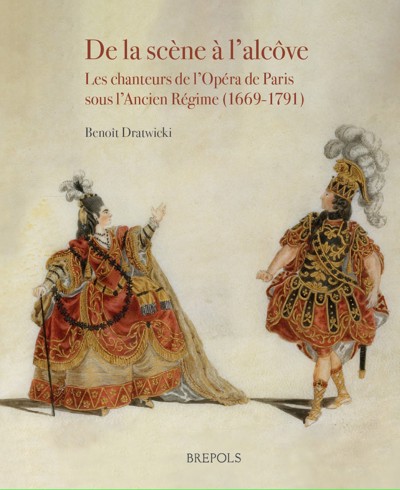
De la scène à l'alcôve
Les chanteurs de l'Opéra de Paris sous l'Ancien Régime (1669-1791)
Benoît Dratwicki
Brepols Publishing – the ‘Music History and Performance: Practices in Context’ series, edited by Christine Jeanneret
In De la scène à l’alcôve, Benoît Dratwicki, researcher and artistic director at the Centre de musique baroque de Versailles, examines the solo singers of the Paris Opéra during the Ancien Régime. From their training to their retirement, this book places performers at the heart of lyric creation and theatrical performance, exploring their careers, stage practices and role within the society of their time.
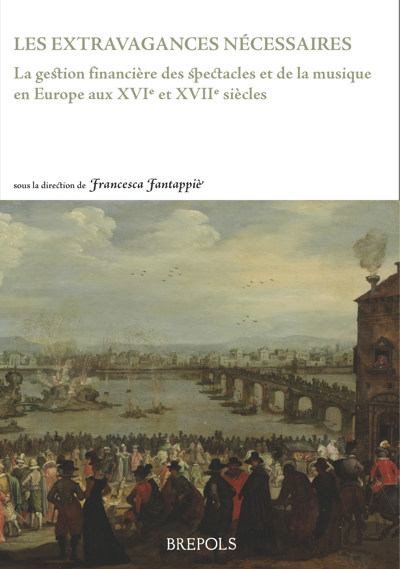
Les extravagances nécessaires
La gestion financière des spectacles et de la musique en Europe aux XVIᵉ et XVIIᵉ siècles
Edited by Francesca Fantappiè
Brepols Publishing – the ‘Epitome musical’ series, edited by Philippe Vendrix
Building on the SPECTACLECONOMICS research project, hosted by the Centre de musique baroque de Versailles, Les extravagances nécessaires explores the economic management of the performing arts in sixteenth- and seventeenth-century Europe. Through the study of festivities, theatre and music, this collective volume examines the organisation, financing and social, cultural and political dimensions of these ephemeral productions.
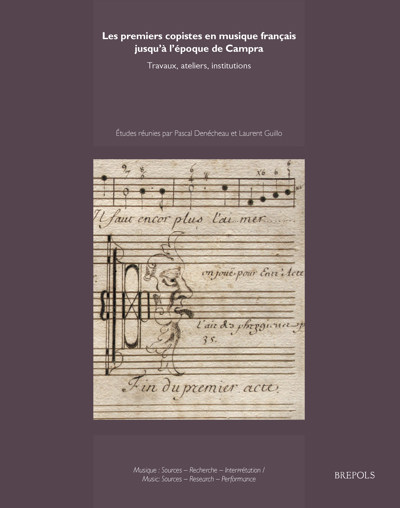
Les premiers copistes en musique français jusqu’à l’époque de Campra
Travaux, ateliers, institutions
Edited by Pascal Denécheau and Laurent Guillo
Brepols Publishing – Music: Sources – Research – Interpretation series, edited by Denis Herlin, Achille Davy-Rigaux and Thomas Vernet
Partnership between the Royaumont Foundation, IReMus and CMBV
Resulting from the AteCop research project, led by the Centre de musique baroque de Versailles and IReMus, this volume is devoted to the earliest French music copyists and their working practices. It explores the diversity of their backgrounds, methods and professional environments, whether working independently or within workshops and institutions.