
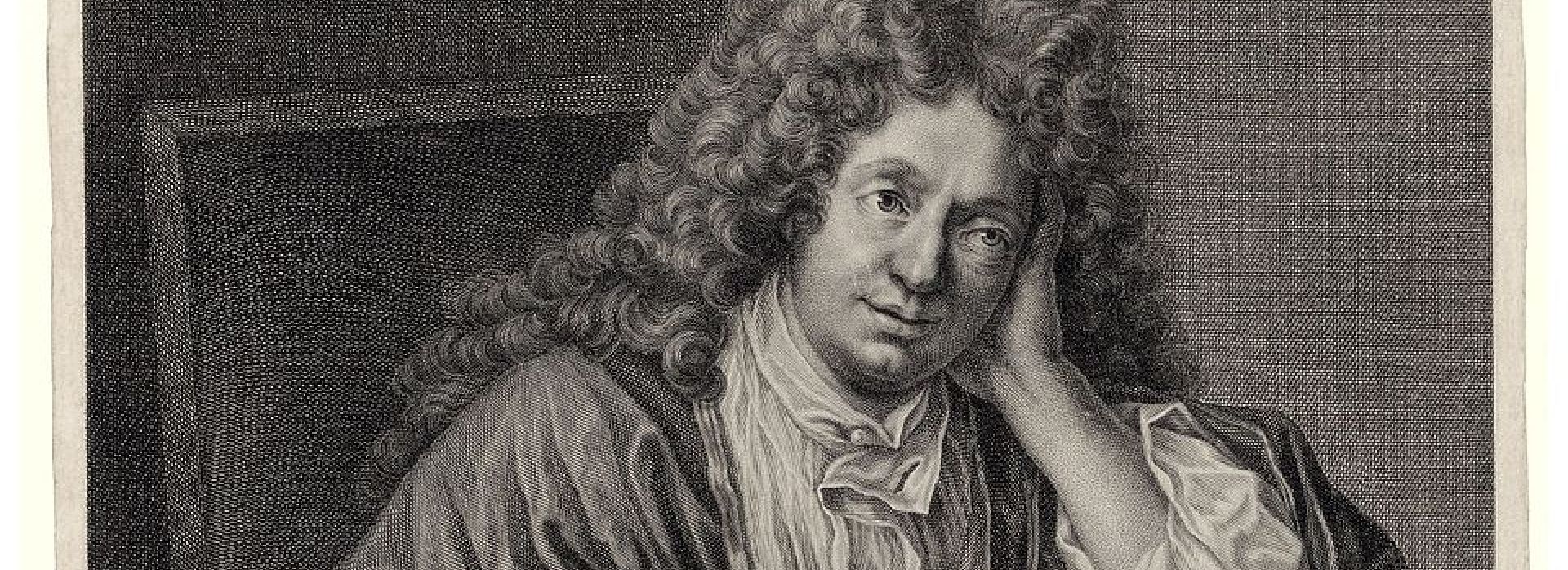

The Centre de musique baroque de Versailles is inviting submissions, open until 31 May 2026, for an international conference to be held on 20 and 21 November 2026 at the Maison Française in Oxford. On the occasion of the 300th anniversary of the death of Michel-Richard de Lalande (1657–1726), the conference "Lalande’s legacy: from fame to posterity" seeks to examine the reputation and legacy of this major figure in the french musical heritage.
Lalande’s death in June 1726 by no means marked the end of the dissemination of his works; on the contrary, it inaugurated a posterity of remarkable longevity, unparalleled in the French musical landscape. From the decades immediately following his death through to the Revolution – and beyond – his grands motets, as well as various vocal and instrumental works, remained firmly embedded in both liturgical and concert practices at court, in Paris, and in the provinces alike. The King’s Chapel, the Concert Spirituel, cathedrals and collegiate churches, as well as concert societies, continued to program his music with sustained success. In the nineteenth and twentieth centuries, Lalande’s name resurfaced in the context of the revival of choir schools (maîtrises), the emergence of musicological scholarship, the first modern editions and subsequent discographic recordings, inaugurating a new phase of recognition that has endured and is even being renewed today.
The paradox is striking: although Lalande was the king’s favoured musician and remained during his lifetime almost exclusively attached to the courtly sphere, his work nevertheless became emancipated from its original context, extending into a wide range of spaces, practices and imaginaries, with immediate and unrivalled success. This remarkable persistence invites reflection on the mechanisms that made it possible. According to what logics of transmission, evolution, reappropriation or even reinvention did his music circulate? What discursive strategies – panegyrics, criticism, biographical narratives – shaped his posthumous fame? And how did the figure of Lalande remain a symbol of a bygone golden age while adapting to the aesthetic, political and religious transformations that have marked the centuries up to the present day?
This conference aims to investigate the mechanisms and stakes of this exceptional posterity. Why and how did Lalande, a quintessential court musician, acquire such a lasting place in the French musical heritage? What modes of dissemination (original sources, the posthumous edition of 1729, copies, arrangements, etc.) ensured the circulation and, more broadly, the influence of his music beyond Versailles? Through what aesthetic or practical adaptations was his work “updated” for new audiences, or conversely approached with a concern for fidelity to “early music”? How did it engage – or fail to engage – with different periods and contexts (vocal ensembles, concert life, pedagogy, performing arts, etc.)? Finally, can one observe a continuity of his presence after the Revolution, or rather a memorial bifurcation?
These scholarly meetings thus invite reflection on the construction of a genuine and singular musical “presence”, bringing together historical, musicological, philological, sociological and performance-based approaches. Proposals may address – though are not limited to – the following themes:
Reputation and posthumous fame: panegyrics, criticism, historiography
Circulation and transmission of the work: original sources, the posthumous edition of 1729, copies, arrangements, etc.
Lalande reinterpreted: reception, adaptations and metamorphoses across contexts
1726–1789: concerts, choir schools
After the Revolution: continuities, ruptures, memorial transfers
Nineteenth to twenty-first centuries: scholarly rediscovery, heritage-making, early
recordings, contemporary creation, editing Lalande today
Proposals (between 500 and 800 words), in French or English, accompanied by a brief biographical and bibliographical note on the author, should be submitted by 31 May 2026, jointly to: bhertz@cmbv.fr and tleconte@cmbv.fr